

Which Features Make a 3 Color Contouring Compact a Practical Choice?
Article Summary
A 3 Color Contouring Compact can simplify facial makeup by bringing complementary shades into one convenient palette. When the colors are designed to work together, users can add dimension, introduce a healthy flush, and highlight selected facial areas without carrying several separate products. However, shade harmony, pigmentation, blendability, packaging quality, and skin-tone compatibility all influence the final result. This guide explains how three-color contouring palettes work, how to apply them effectively, what buyers should evaluate before purchasing, and how cosmetic brands can develop products for different markets. It also introduces the 3 Color Contouring Compact offered by Yiwu Boni Cosmetic Accessories Co., Ltd. and provides practical guidance for wholesale sourcing and OEM/ODM discussions.
01 · Product Fundamentals
Understanding the 3 Color Contouring Compact
Face makeup has evolved beyond full-coverage foundation and a single finishing powder. Today's consumers often want products that make their routines more flexible, whether they are preparing for work, creating a soft everyday look, or building a more defined appearance for photography and special occasions.
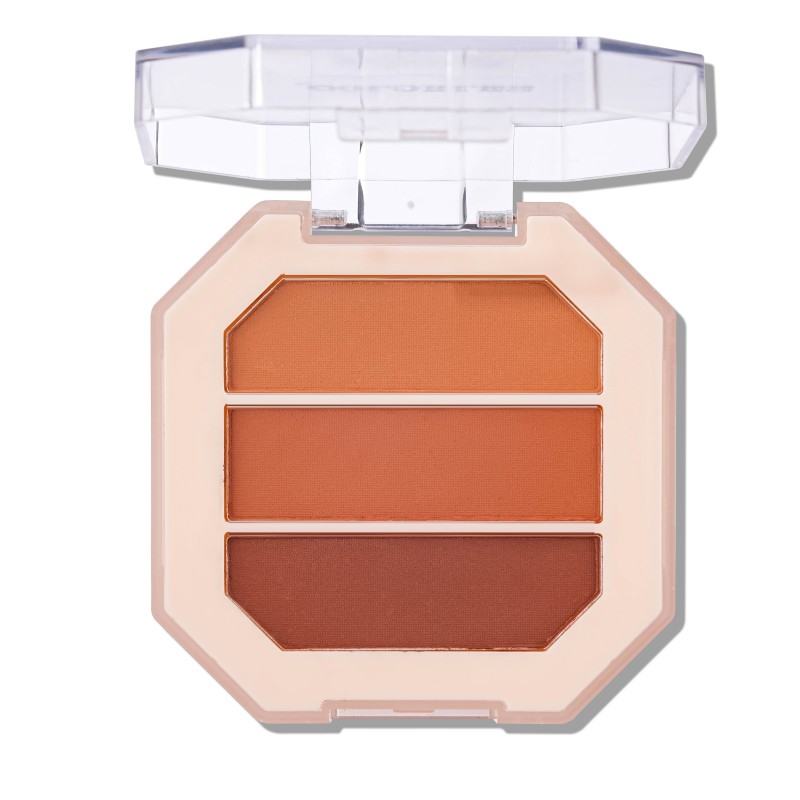
A 3 Color Contouring Compact combines three complementary shades in one portable makeup product. Depending on its formulation and shade arrangement, a palette may support contouring, blush application, highlighting, or other complexion-enhancing techniques. The specific functions depend on the colors, finishes, and intended product design.
Contouring generally uses shadow-like tones to create the visual impression of depth. Blush adds color to the cheeks, while highlighter draws attention to selected areas through light reflection. When these functions are thoughtfully coordinated, a compact palette can help users achieve a more dimensional look with fewer separate products.
For consumers, the main appeal is convenience. For retailers and cosmetic brands, the opportunity lies in combining useful functionality, attractive presentation, and an easy-to-understand product concept.
The key principle: Three shades should have clear, complementary roles. A well-designed palette makes it easier to create a cohesive look rather than leaving users to guess how unrelated colors should be combined.
02 · Shade Design
How Three Shades Work Together in a Contouring Compact
The success of a three-color palette depends on how its shades interact. A useful combination considers undertones, depth, pigmentation, finish, and the areas of the face where each shade is intended to be applied.
Contour: Creating Soft Definition
A contour shade is generally designed to create a natural-looking shadow. Depending on the palette, it may be applied beneath the cheekbones, along the jawline, or around the sides of the nose. The most suitable tone should complement the user's complexion without appearing excessively orange, gray, or dark.
Blush: Adding Freshness and Color
A blush shade introduces warmth or a fresh flush to the cheeks. Pink, peach, rose, and other color families can produce different visual effects. The right shade depends on the overall color story, target customer, and desired makeup style.
Highlight: Bringing Light to Selected Areas
A highlighting shade can help emphasize the cheekbones and other selected areas. Depending on its finish, it may provide a subtle satin effect or a more noticeable glow. For consumers who prefer natural makeup, restrained reflectivity can be easier to integrate into a daily routine.
| Shade Function | Typical Application Area | Desired Effect | Important Design Consideration |
|---|---|---|---|
| Contour | Cheek hollows, jawline, selected nose areas | Soft shadow and definition | Natural-looking undertone and easy blending |
| Blush | Cheeks | Freshness and visible color | Buildable pigmentation and shade harmony |
| Highlighter | Upper cheekbones and other selected high points | Light reflection and dimension | Appropriate finish and controlled shine |
These are common roles for a three-color complexion palette, not a guarantee that every product uses the same arrangement. Buyers should confirm the intended function of each shade with the manufacturer before preparing product descriptions or application instructions.
03 · Everyday Advantages
Key Benefits of a 3 Color Contouring Compact
1. A More Convenient Makeup Routine
Combining complementary shades in one compact reduces the need to carry multiple separate products. Users can move from subtle definition to a more polished look without repeatedly changing palettes or searching through a makeup bag.
2. More Consistent Color Coordination
When shades are developed as a coordinated set, the colors can be selected to complement one another. This helps users create a more unified complexion look and may simplify shade selection for consumers who are less experienced with contouring.
3. Flexible Application
A versatile palette can support a range of looks, from light daytime makeup to more defined evening styles. Applying less product and blending gradually creates a softer result, while additional layers can increase color intensity when the formula allows it.
4. Portable Packaging
A compact format is convenient for travel, handbags, makeup kits, and quick touch-ups. Packaging design still matters: secure closures, practical pan layouts, readable labeling, and suitable protection help make the product easier to use.
5. Commercial Potential for Beauty Brands
For cosmetic retailers, distributors, and private-label brands, a three-color palette offers a straightforward product concept that can fit into complexion collections. Brands may explore different shade stories, packaging styles, and positioning strategies, subject to the manufacturer's available development options.
04 · Application Guide
How to Apply a Three-Color Contouring Palette Step by Step
Good application starts with a light hand and a clear understanding of the intended role of each shade. The following routine provides a general guide for palettes that combine contour, blush, and highlight functions.
Step 1: Prepare the Skin Start with clean, moisturized skin. Apply foundation or complexion products if desired, and allow them to settle before adding powder products. The best preparation depends on whether the palette uses powder, cream, or another texture.
Step 2: Apply the Contour Shade Use a suitable brush to apply a small amount beneath the cheekbones or along other intended contour areas. Keep the initial application light, then blend the edges until the shadow appears natural.
Step 3: Add Blush Apply blush to the cheeks and blend toward the surrounding complexion. Begin with a small amount to avoid an overly strong color contrast.
Step 4: Add Highlight Apply the highlighting shade to selected high points, such as the upper cheekbones. Adjust the amount according to the desired finish and the product's level of reflectivity.
Step 5: Blend and Review Check the makeup in natural or balanced lighting. Soften visible edges, remove excess product with a clean brush if necessary, and make small adjustments rather than applying another heavy layer.
Users should follow the product's actual instructions and avoid applying products near the eyes or on other areas unless the labeling indicates that such use is appropriate. Brushes should be cleaned regularly to maintain a more hygienic makeup routine.
05 · Shade Selection
Choosing Contouring Shades for Different Skin Tones
Shade compatibility is one of the most important factors in a contouring palette. A product can have attractive colors in its compact yet still produce an unsuitable result if the tones are too warm, too cool, too light, or too deep for the intended user.
Fair and Light Complexions
Soft contour tones can help create definition without appearing harsh. Blush shades in restrained pink or peach families may provide a fresh finish, while a subtle highlight can add dimension without overwhelming the complexion.
Medium and Olive Complexions
Medium-depth contour colors and balanced blush tones can help maintain visible definition. Buyers developing products for this segment should consider how warm, neutral, and olive undertones affect the appearance of each shade.
Tan and Deep Complexions
Deeper complexions may require more saturated or deeper shades to maintain visible contrast. A highlight should provide the intended effect without leaving an unwanted pale cast. Testing on representative skin tones is especially valuable during product development.
Why Undertones Matter
Skin depth and undertone are different considerations. Two people with similar skin depth may respond differently to the same shade because one complexion is cooler while another is warmer or more neutral. Product testing should therefore include a range of users rather than relying on a single swatch.
For product developers: Evaluate the full shade combination on different skin tones, under consistent lighting, and at different application intensities. Record observations about blendability, visible color, and the finished appearance.
06 · Product Format
Three-Color Contouring Palettes vs. Separate Makeup Products
A multi-shade compact is not automatically the best format for every customer. Comparing it with individual products helps retailers determine where it fits within a broader makeup collection.
| Consideration | 3 Color Contouring Compact | Separate Makeup Products |
|---|---|---|
| Convenience | Several coordinated shades in one package | Requires carrying multiple products |
| Shade coordination | Can be designed as a complementary set | Users choose and coordinate shades individually |
| Customization | Depends on palette layout and manufacturer options | Individual shades can be selected independently |
| Travel use | May reduce the number of separate items needed | May require more storage space |
| Product replacement | Replacing one shade may require replacing the compact | Individual products can be replaced separately |
| Retail positioning | Suitable for multi-function complexion concepts | Suitable for focused, single-function products |
For brands, the decision should reflect the intended customer, price point, product assortment, and purchasing behavior. A three-color compact may work well as an entry-level complexion product, a travel-friendly item, or part of a coordinated makeup set. Actual suitability depends on formulation, packaging, and consumer testing.
07 · Quality Assessment
What Defines a Quality 3 Color Contouring Compact?
For both individual users and wholesale buyers, a compact should be evaluated as a complete cosmetic product. Attractive packaging alone cannot compensate for inconsistent color payoff, poor blending, fragile components, or inadequate product information.
Texture and Blendability
The formula should perform according to its intended texture. Powder products should be assessed for pickup, distribution, fallout, and blending. Cream formulas require different checks, including spreadability, layering behavior, and compatibility with other complexion products.
Color Consistency
Shade appearance should be checked against approved samples and specifications. Buyers should consider differences between product in the pan, applied swatches, and the finished look on skin. Production batches should be assessed using an agreed inspection method.
Packaging Functionality
Check the compact's closure, hinge, pan arrangement, surface finish, and resistance to ordinary handling. Packaging should protect the formula during storage and transport while remaining practical for consumers.
Ingredient and Regulatory Documentation
Request the ingredient list, applicable product specifications, batch traceability information, and relevant safety or quality documents. Requirements vary by destination market and product type. Buyers should confirm that the formula, labeling, claims, and documentation meet the regulations applicable to the markets where the product will be sold.
Stability and Product Consistency
Depending on the formulation, suitable evaluations may include stability testing, packaging compatibility, microbial quality assessments where applicable, and checks on color, texture, and odor. The manufacturer should explain which tests are relevant to the product and what records are available.
08 · Product Spotlight
Exploring the 3 Color Contouring Compact from Yiwu Boni Cosmetic Accessories Co., Ltd.
For beauty brands and distributors exploring multi-shade complexion products, Yiwu Boni Cosmetic Accessories Co., Ltd. offers a 3 Color Contouring Compact designed as an all-in-one face makeup solution. According to the company's product information, the palette combines blush and highlighting functions and is intended to support flexible makeup styling.
The product description emphasizes a soft texture and even application. These are useful evaluation points for buyers comparing complexion products, although final performance should be confirmed through sample testing and the relevant product documentation.
| Product Detail | Published Information |
|---|---|
| Product Name | 3 Color Contouring Compact |
| Product Category | Face Makeup / Contour |
| Product Size | 72 × 72 × 17 mm |
| Net Weight | 7.5 g |
| Described Functions | Blush and highlighting functions within a multi-shade compact |
| Supplier | Yiwu Boni Cosmetic Accessories Co., Ltd. |
These specifications provide a starting point for product evaluation, not a substitute for a current quotation or approved sample. Buyers should confirm the available shade combinations, exact formula type, packaging details, customization options, minimum order quantity, and delivery schedule directly with the supplier.
Learn more on the Boni contour product page or explore the company's broader cosmetics product range.
As a cosmetics supplier serving international markets, Boni also presents OEM/ODM-related capabilities on its company website. Businesses considering private-label development should discuss the specific scope of formula development, shade matching, packaging customization, documentation, and production arrangements for their proposed project.
09 · Wholesale Purchasing
A Wholesale Buyer's Checklist for Selecting a Contouring Compact
Choosing a product for a retail or private-label collection involves more than checking the unit price. A structured evaluation helps buyers compare suppliers and reduce avoidable problems during sampling and production.
- Define the target customer: Identify the intended age group, preferred makeup style, skin-tone range, and retail price positioning.
- Confirm the formula: Establish whether the product is powder, cream, or another texture, and request the corresponding product specifications.
- Evaluate all three shades: Check their individual roles, color harmony, pigmentation, blendability, and performance on representative skin tones.
- Request a physical sample: Assess the formula, compact closure, pan layout, and packaging before confirming mass production.
- Review customization options: Ask about available shades, logo placement, packaging materials, artwork requirements, and any associated development costs.
- Verify quality documents: Request relevant ingredient, safety, stability, and batch documentation, depending on the product and destination market.
- Clarify order terms: Confirm minimum order quantities, sample charges, production lead times, payment terms, and shipping arrangements.
- Agree on quality standards: Establish the approved reference sample, acceptable tolerances, inspection procedures, and handling of nonconforming goods.
Questions to Ask Before Confirming an Order
Can the supplier provide samples of the proposed shade combination? What is the minimum quantity for a customized package? Which documents are available for the intended market? How will batch consistency be evaluated? What are the expected production and shipping timelines?
Clear answers to these questions help businesses plan launches more accurately and establish realistic expectations with their suppliers. For new brands, starting with a well-defined product brief and sample evaluation is often more useful than committing to a large order before the product concept has been tested.
10 · Frequently Asked Questions
Frequently Asked Questions About 3 Color Contouring Compacts
1. What is a 3 Color Contouring Compact?
It is a compact makeup product containing three coordinated shades. Depending on its formulation and design, it may combine contouring, blush, highlighting, or other complexion-enhancing functions.
2. Can beginners use a three-color contour palette?
Yes, provided the product has understandable shade functions and a formula that is manageable to apply. Starting with a small amount, blending gradually, and following the product instructions can help beginners achieve a more controlled result.
3. Can the three shades be used separately?
In many palettes, individual shades can be applied separately when their intended functions allow it. Users should follow the product labeling and avoid using a shade in an area for which it has not been designed.
4. Is a three-color contour compact suitable for different skin tones?
Suitability depends on the shade depth, undertones, pigmentation, and intended customer. Brands should evaluate representative skin tones and consider developing different shade combinations when one palette cannot adequately serve the target market.
5. What is the difference between contour and highlighter?
Contour generally creates the appearance of shadow and depth, while highlighter draws attention to selected areas through light reflection. Their finishes and application techniques differ, so the two functions should not be treated as interchangeable.
6. What should wholesale buyers check before purchasing?
Buyers should evaluate shade harmony, formula performance, packaging quality, ingredient and safety documentation, customization options, minimum order quantities, production lead times, and the supplier's quality-control process.
7. Can Yiwu Boni Cosmetic Accessories Co., Ltd. support private-label contouring products?
Boni presents OEM/ODM-related capabilities on its company website. Buyers should contact the company to confirm the customization services available for the specific compact, including shade development, packaging, logo application, minimum quantities, and supporting documentation.
8. What information should be included in a quotation request?
Include the product reference, estimated order quantity, target market, desired shade combination, packaging requirements, logo specifications, documentation needs, and expected delivery date. This information helps the supplier assess the project and prepare a more relevant quotation.
Build Your Next Face Makeup Collection with Boni
Looking for a 3 Color Contouring Compact for your cosmetics brand, wholesale business, or private-label collection? Yiwu Boni Cosmetic Accessories Co., Ltd. invites buyers to discuss product specifications, shade requirements, packaging ideas, and sourcing needs.
Share your target market, estimated order quantity, preferred product functions, and customization requirements to begin a focused product discussion. The Boni team can clarify the available options and the next steps for sampling and quotation.
Contact Us for Product DetailsConfirm current product availability, specifications, order terms, and customization options directly with the supplier.